
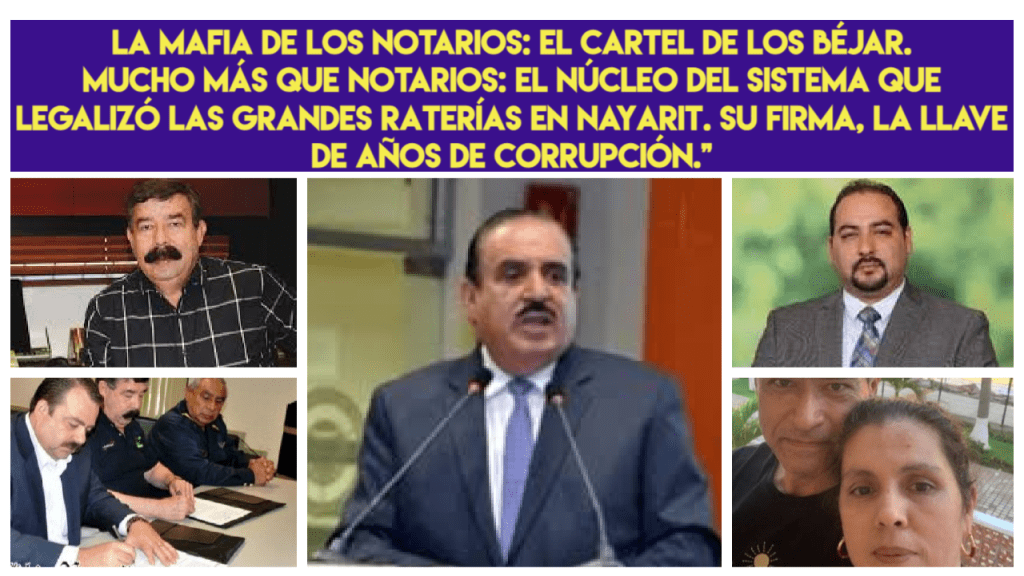
In Nayarit, the figure of the notary is not a symbol of security, but of legalized plunder. Not the guardian of the law, but an accomplice with a seal. What happens when the signature meant to certify your property is the very one that takes it away, that launders fraud and signs off on your dispossession?
Today we are not talking about rumors. Today we expose the mafia in robes: the Béjar dynasty. The surname that turned public trust into a family business, the cartel that made corruption its notarial protocol. Where others saw a routine procedure, they saw a gold mine. And Nayarit paid—and continues to pay—the price.
Also these cartel bosses: the Béjar Fonseca brothers.
The proper names of impunity: José Luis and Héctor Béjar Fonseca. For decades, they were not notaries; they were the architects of a corrupt system. Their power was not born of the law, but of their deep ties to the governments in power. With each passing administration, instead of being investigated, they were granted a renewed license to operate: protection, complicity, and the guarantee that their seal would continue to be the perfect tool for dispossession. They did not operate in the shadows; they operated from the notarial desk, shielded by the political power that protected them.
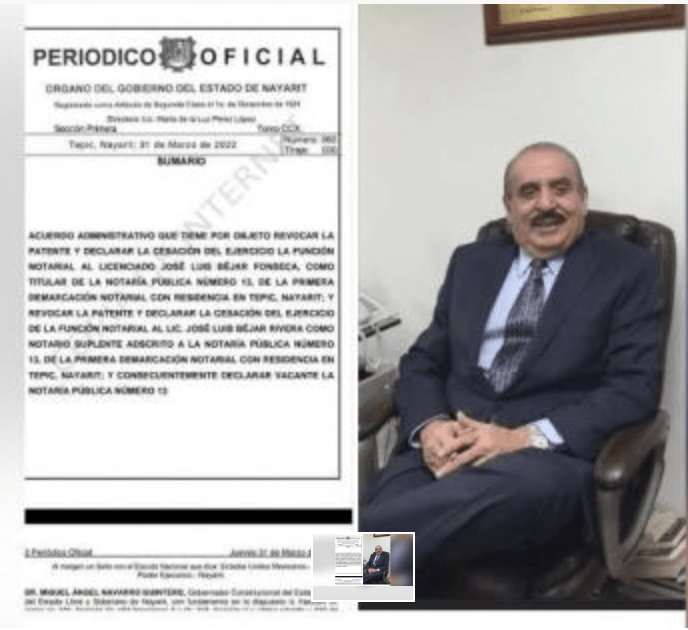
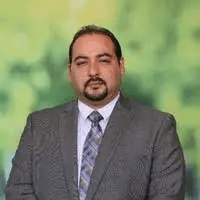
Also this: José Luis Béjar Fonseca — the core of the corrupt system.
Identified by multiple sources and victims as the operational mastermind of the corrupt notarial network in Nayarit, José Luis Béjar Fonseca embodies impunity with a seal. His profile goes beyond that of a notary: he is a power broker whose ego and ambition shaped a system tailored to himself.
The Notary King: His need to perpetuate his name went so far as to naming all three of his sons after himself, José Luis—a symbolic act of a dynasty that believed itself untouchable.
The Predatory Professor: From his lectern at the Autonomous University of Nayarit (UAN), he was repeatedly accused of abusing his power. Former students and recurring accounts in university circles accuse him of harassing and manipulating students, promising grades or academic favors in exchange for romantic or sexual relationships, completely perverting the trust placed in the institution.
The Late (and Incomplete) Fall: It was not the ordinary justice system, but rather an administrative action by the State Congress that finally revoked his notarial license in 2023. However, this act—though historic—remains an insufficient sanction. To date, he faces no criminal charges for the extensive record of alleged theft, fraud, and the legalization of dispossession that were carried out for years through his notary office. His case is the perfect example: in Nayarit, cartel bosses may have their tools taken away, but the full weight of the law is never applied. Impunity persists.
Here you go:
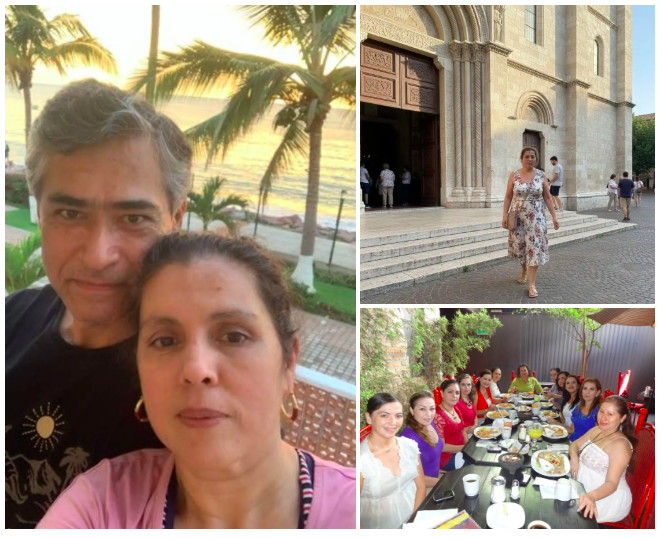
Gloria Samantha Béjar Rivera: false holiness and the cartel’s dirty finances.
If the Béjar Rivera brothers are the architects of the fraud, Gloria Samantha is their minister of illicit finance. The daughter of José Luis, this woman has built a public image of devotion, actively participating in various sects and religious circles in Tepic, where she presents herself as a person of high moral standing. But behind the veil of holiness hides the cartel’s key financial operator.
Her role within the criminal structure is precise and vital:
The Collector: She is the one who receives and manages the money derived from forged deeds and fraudulent notarial acts generated at Notary Office No. 13.
The Launderer: Her specialty is laundering criminal profits. She does not merely hide the money; she designs the mechanisms to make it disappear from the legal radar.
The International Crime Connection:
Her inner circle reflects her true business. She married a fugitive from Danish justice who used Mexico as a hideout. This alliance was no coincidence: through her husband’s international criminal connections and her own networks, Samantha Béjar has funneled illicit resources into a complex web of shell companies in tax havens, ensuring that the money plundered from Nayarit is never recovered.
The Double Face:
Gloria Samantha Béjar Rivera is the perfect symbol of the cartel’s hypocrisy: a “little saint” in the churches of Tepic, and a money launderer in offshore registries. While she preaches devotion, her fortune is built on the fraud and dispossession that her family legalized with a public seal.
Here is the American English translation:
Héctor Manuel Béjar Fonseca: the notary–prosecutor, accomplice of a fugitive governor.
Fundamental clarification: the fugitive is his political protector, former governor Ney González Sánchez, who appointed him as Prosecutor. Héctor Béjar Fonseca has not fled; he operates with impunity from his notary office. His career is that of an operator loyal to white-collar crime:
The Complicit Prosecutor: His appointment as Prosecutor of the Attorney General’s Office under the government of Ney González was not based on legal merit, but on loyalty and usefulness. From that position, instead of pursuing crime, he shielded and facilitated a network of multimillion-peso dispossessions involving public trusts. He was the legal arm that gave an appearance of legality to the looting, with the FIBBA case being the most emblematic. While his boss, Ney González, was embezzling, Héctor Béjar Fonseca was affixing the seal of impunity.
The Embezzling Rector: As a “reward” or strategic transfer, he was appointed Rector of the Technological University of Nayarit (UT Nayarit). There he replicated the same model: his administration was investigated for serious embezzlement of university funds, proving that his method of operating—turning public assets into loot—was consistent, whether from the justice system or from a university presidency.
Active Impunity: Unlike his fugitive patron, Héctor Manuel Béjar Fonseca does not hide. He remains the holder of Public Notary Office No. 26, a position that guarantees him influence, income, and a status that mocks his victims. He is the symbol of a system that punishes the mastermind who flees, but leaves untouched the operator who made the fraud possible. His notary office remains standing, while the trusts and the university they plundered remain in ruins.
Here is the American English translation:
Héctor Béjar Fonseca: the official notary of organized crime and government corruption.
After his time as Prosecutor, far from stepping aside, Héctor Béjar Fonseca consolidated his role as the trusted certifying officer for high-level crime in Nayarit. His notarial activity reached its peak during the administration of Roberto Sandoval and the era of Edgar “El Diablo” Veytia.
The Notary of Official Corruption:
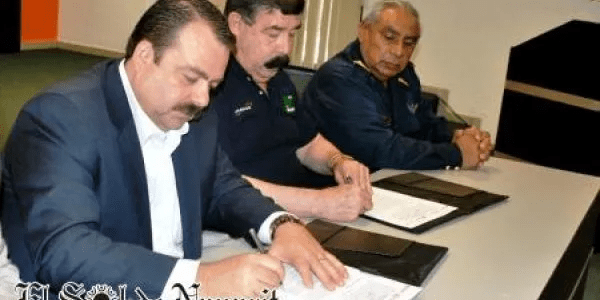
During the government of Roberto Sandoval (now arrested and prosecuted for organized crime and money laundering), Héctor Béjar Fonseca served as the administration’s official notary. His signature and seal validated numerous acts and contracts carried out under the shadow of a government now identified as a criminal enterprise. Documentary and photographic evidence shows him operating as the internal legalizer of institutional looting.
The Notary of the Narco-State:
His clientele included even more sinister figures. He was the notary for Edgar Veytia, the former Prosecutor arrested in the United States and convicted of drug trafficking and criminal conspiracy. By serving Veytia, Béjar Fonseca was not a mere paperwork handler; he was a key facilitator within the legal infrastructure of the “narco-state,” laundering assets and formalizing the business dealings of one of the most feared criminal networks in the region.
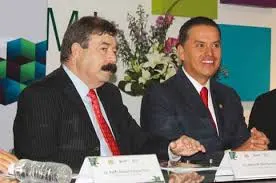
Photos and documents do not lie: Héctor Béjar Fonseca appears, pen in hand, alongside these confirmed criminals. His notary office was not a legitimate business; it was a specialized service bureau for white-collar criminals and drug traffickers, a crucial bridge between the illegal world and the public registry.
Conclusion: If during the Ney González era he was the complicit prosecutor, in the Sandoval–Veytia era he became the notarial ambassador of organized crime. His career shows that the Béjar cartel was not limited to notarial fraud, but vertically integrated itself into the very heart of the criminal structures that ruled Nayarit, using public trust to give legal form to corruption and drug trafficking.
Despite overwhelming evidence, the governments of Echevarría and Navarro have chosen complacency and complicit omission. They have not dismantled the notarial mafia because this is not a problem of a single family: the Béjars are only the most visible symptom of a rotten system. The corruption network extends to most of the notarial profession in Nayarit—a legalized cartel that recent governments refuse to confront—demonstrating that in Nayarit, impunity also comes with a seal and the signature of those in power.
Do you want to know the full truth others keep silent?
The mafia of notaries, the legal cartels, and the corruption network in Nayarit do not end here. There are more names, more evidence, and more stories waiting to be exposed.
If you believe a free press is vital to fighting impunity, join our community. Subscribe to our platforms and receive exclusive investigations, in-depth reports, and the information that those in power do not want you to see.
Don’t stay out. The truth needs witnesses. And allies.
👉 Subscribe: roberti.news.blog
🔔 Activate notifications so you don’t miss anything.
Together, we will continue breaking the silence.

 ROBERTI news
Deja un comentario